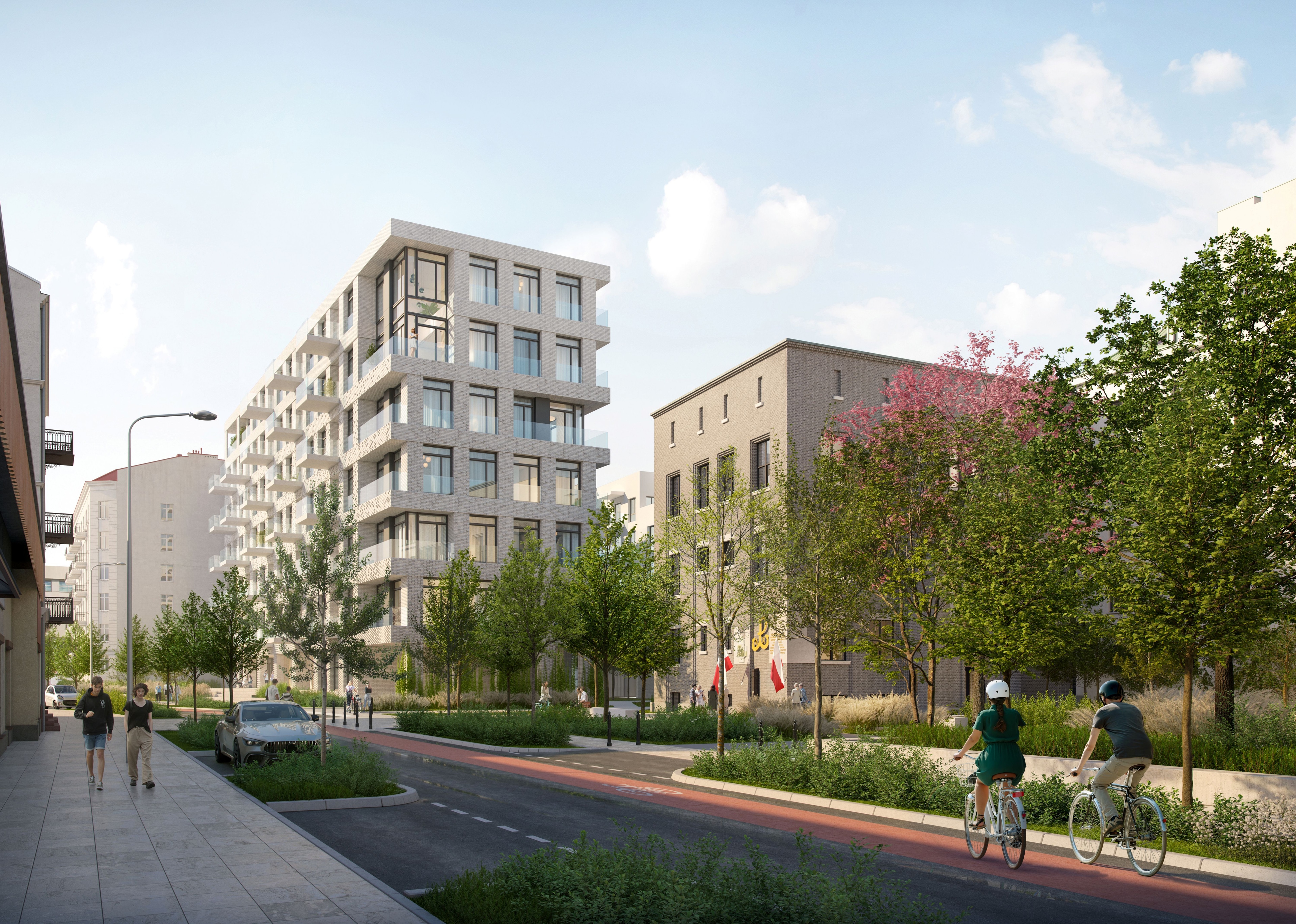
Brzeska 24 – Residential complex with services, underground parking, and site development with supporting infrastructure
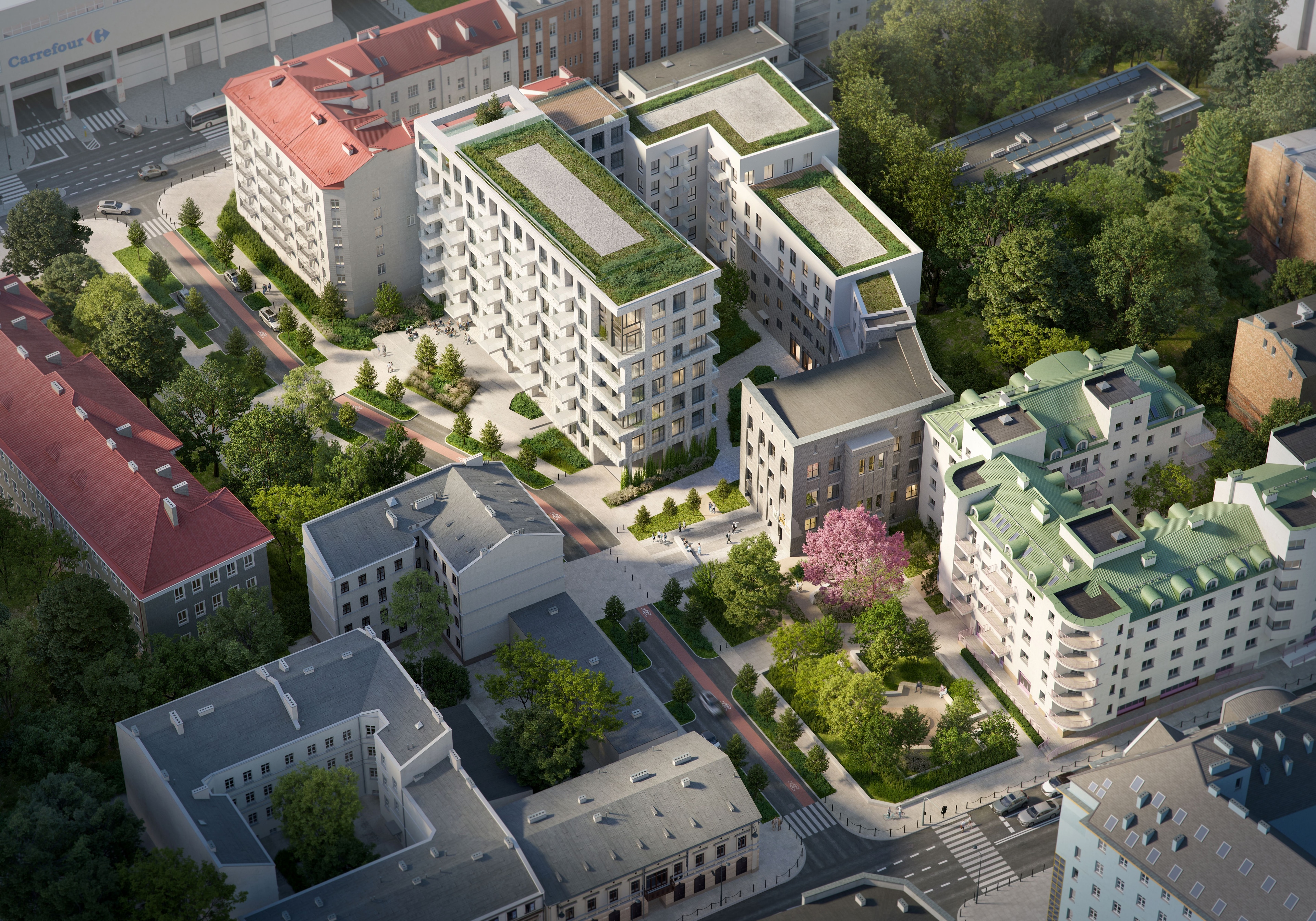
The Brzeska 24 complex is located in Old Praga, in the Praga-Północ district of Warsaw, next to the Galeria Wileńska and Wileński Railway Station and close to the Koneser Praga Center. It lies in the very heart of Old Praga, on a street with a rich and complex history. The main idea of the project is to create a coherent ensemble combining new and historic architecture while respecting the unique character of the place. An integral part of the project is the renovation of Brzeska Street along the section between Białostocka and Ząbkowska Streets. The goal is to create a high-quality public space and restore the significance of this location as an important witness to the history of Praga.
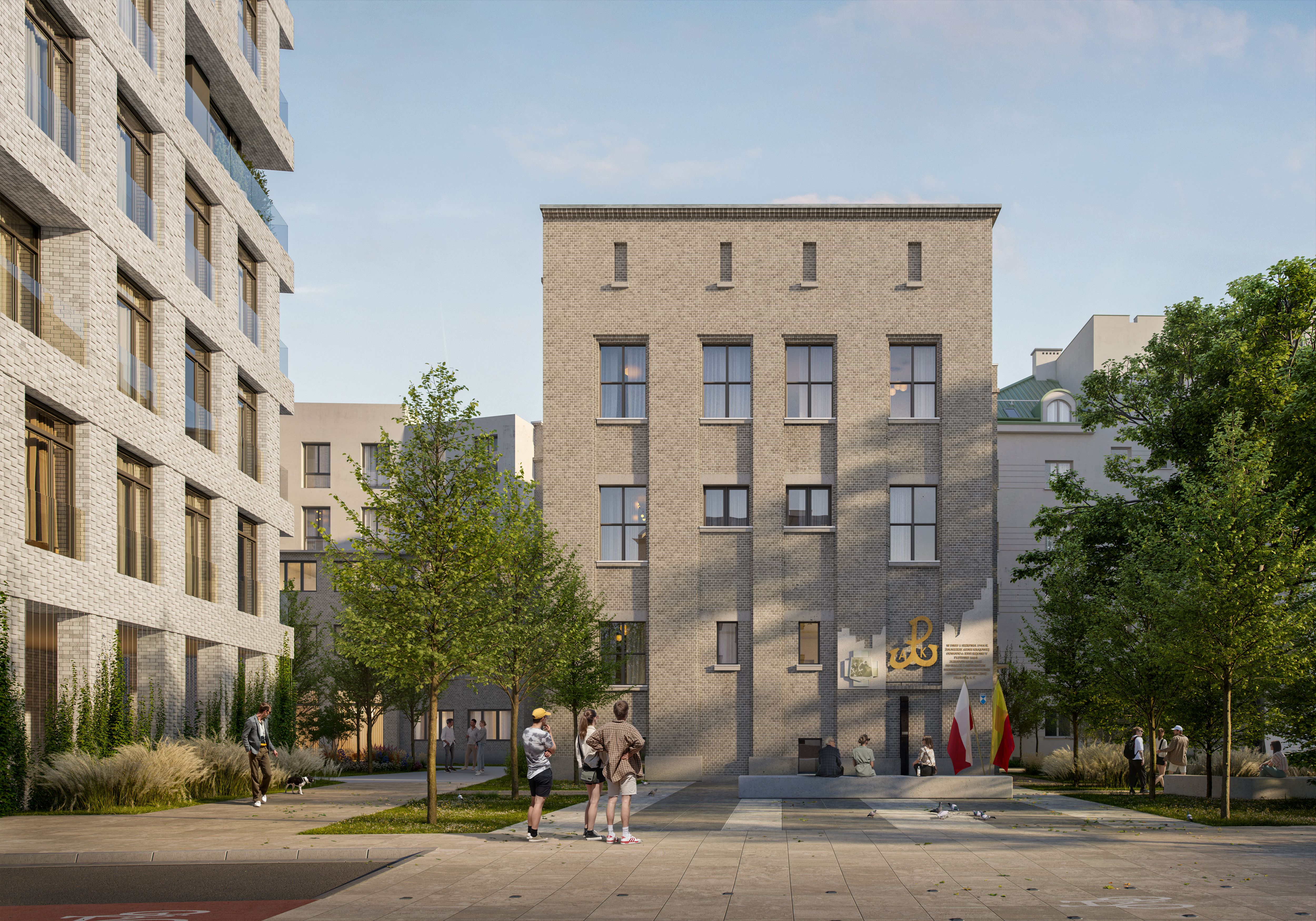
Between 1934 and 1936, the first buildings for a telephone exchange— a branch of P.A.S.T. (Polish Telephone Joint-Stock Company)—were constructed on the corner of Brzeska and Ząbkowska Streets, built of grey industrial brick. On 1 August 1944, the building was captured after fighting with German occupying forces by soldiers of the Home Army, as commemorated by a memorial plaque installed on the building in the early 1990s. In 1959, a small single-storey building was constructed on the plot, and in 1971 a gatehouse building and a dominant element on Brzeska Street were added—a tall seven-storey technical and office building with one additional technical (eighth) floor. On 9 July 2004, the pre-war buildings were placed under heritage conservation protection. Beneath the commemorative plaque stands a preserved wooden post to which horses were once tied. The façade still bears visible traces of combat from the period of the Second World War.
In pre-war Praga, small manufactories and factories—typically built of red brick—were characteristic elements of the urban fabric. A rare exception is the PAST building erected here in the 1930s, featuring a façade made of grey cement brick. The project adopts this material as a unifying element that highlights the specific identity of the place.
The historic PAST building forms a distinctive landmark within the district. The design preserves the grey cement-brick façade laid in a header bond, including the visible “wounds” — bullet marks and damage remaining from the Warsaw Uprising. The façade will be gently cleaned and restored in accordance with conservation guidelines, while maintaining the visible traces of wartime damage. The project also proposes removing the existing fence and creating an intimate public square accessible to residents. This space will serve as a representative setting around the memorial site where annual commemorations of the outbreak of the Warsaw Uprising take place.
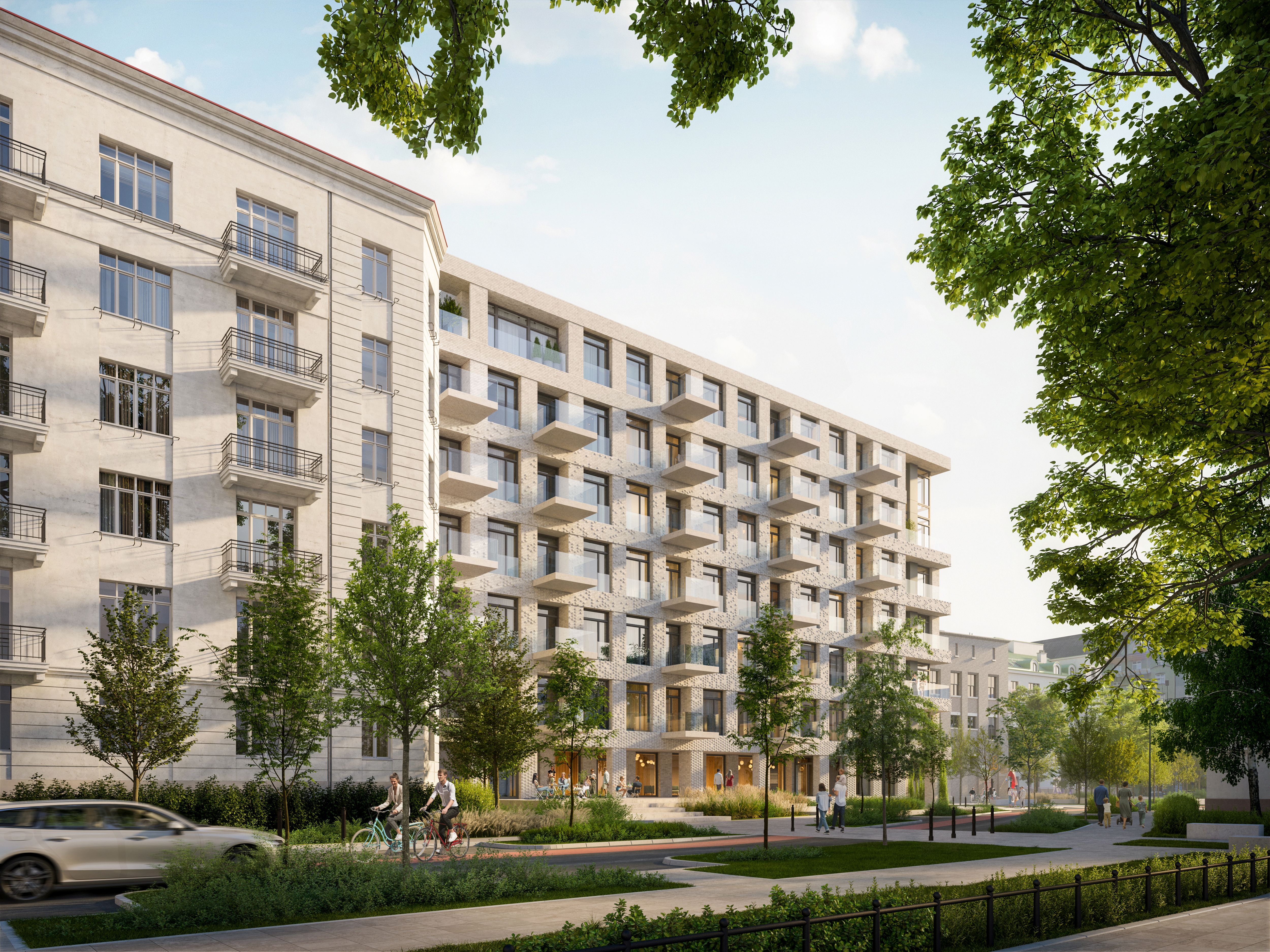
The existing technical and office functions will be transformed into residential and service-oriented, city-forming uses, accompanied by the adaptive reuse of the existing neglected buildings. The aim is to revive this distinctive part of the district and return it to its residents. By introducing new elements into the existing urban block, the design highlights the historic layout of a typical Praga courtyard.
Praga is one of the oldest and most authentic districts of Warsaw, preserving the unique atmosphere of the pre-war city. Traditional Praga courtyards once served as places of neighborhood integration, where everyday life unfolded collectively and residents often knew each other for generations. The project aims to recreate this unique character of the historic urban block.

The revitalization includes a comprehensive renovation of the roadway, sidewalks, and the green public square.